

The skull base is the complex area where the skull meets the top of the nose, sinuses and neck, close to the brain, eyes and major nerves. Tumours here are often found through headaches, vision or hearing changes, and treatment calls for a team-based surgical approach.
Signs Worth Getting Checked
Should You Be Worried?
Many skull base tumours are benign and slow-growing, and not every headache signals one. What matters is a persistent headache that comes with vision, hearing or facial nerve changes, that combination is worth prompt imaging rather than being treated as routine.
What Raises Your Risk
Most skull base tumours have no clearly identified cause. Prior radiation exposure is a known risk factor, and a small number are linked to inherited conditions.
Already Have Imaging? Considering a Second Opinion?
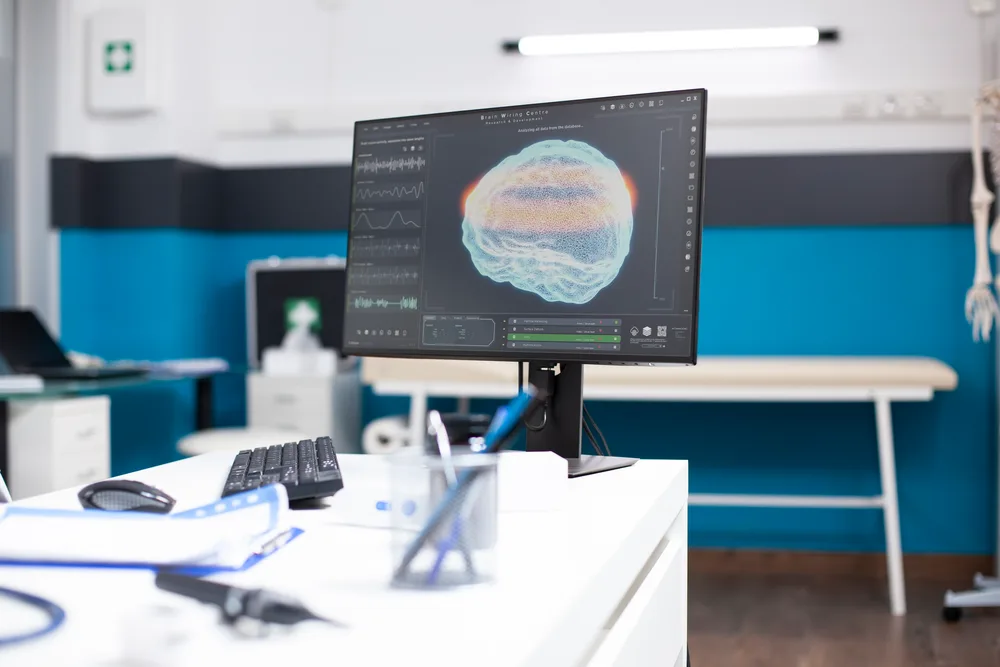
Skull base tumours often involve more than one specialist, and it's common to want a second opinion before committing to a treatment plan. That's a reasonable step, not a delay. Bring your existing imaging and reports to your consultation with Dr. Powle so they can be reviewed as part of the visit and discussed alongside the recommended approach.
How It's Diagnosed
MRI or CT imaging to locate and characterise the tumour.
Hearing and vision assessment where relevant to the tumour's location.
Multidisciplinary review, often involving neurosurgery, to plan the safest approach.

How It's Treated
- Surgery, frequently through a combined approach with neurosurgery depending on the tumour's exact location.
- Endoscopic or robotic-assisted techniques for suitable cases.
- Reconstruction planned in where the surgical approach requires it.
- Radiation considered for select cases, either alone or alongside surgery.
Frequently Asked Questions
No, many are benign. Whether it's benign or malignant significantly changes the treatment approach, which is why proper diagnosis matters before anything else.
A persistent headache combined with vision changes, hearing loss, facial numbness or balance problems is what distinguishes it from an ordinary headache.
Not always, but many cases benefit from a combined approach with neurosurgery depending on exactly where the tumour sits.
Yes, outside imaging and reports can be reviewed as part of your consultation.
This is central to how surgery is planned, and it's discussed in detail before any decision is finalised.
Book Your Skull Base Tumour Consultation in Pune
A skull base tumour diagnosis is a lot to process, and a clear, coordinated plan makes it more manageable. Dr. Vidita Powle Danait provides expert skull base tumour diagnosis and treatment in Pune.