
Quick answer: Many throat cancers, especially those found at an early stage, can be treated with the aim of a cure. Whether that is possible for a particular person depends on where the cancer started, how far it has spread, the type of cancer, HPV status and the person’s overall health. Only a specialist who has examined you and reviewed your reports can tell you what to expect in your case.
“Is it curable?” is usually the first question people ask after hearing the words throat cancer. It is a fair question, and the honest answer is that it depends. Throat cancer is not one disease. It covers cancers of the voice box, the tonsils and base of the tongue, and the lower throat, and each behaves differently.
This article explains what “curable” means in cancer care, the factors that shape treatment outcomes, the main treatment options, and the questions worth asking your doctor.
What Does “Curable” Mean for Throat Cancer?
Doctors often talk about treatment with curative intent. This means the treatment plan aims to remove or destroy all the cancer, with no evidence of disease remaining afterwards. When a cancer has spread widely, treatment may instead aim to control it, ease symptoms and protect quality of life for as long as possible.
After successful treatment, regular follow-up is important because some head and neck cancers can come back, most often within the first few years. Doctors usually avoid saying “cured” until a person has remained free of cancer for a long period of follow-up.
What Treatment Outcomes Depend On
- Stage at diagnosis: small cancers confined to where they started are generally easier to treat successfully than cancers that have spread to lymph nodes or other organs. This is the single most important reason to get persistent symptoms checked early.
- Location: cancers of the vocal cords often cause hoarseness early, so they tend to be found sooner. Cancers in the lower throat may cause few symptoms until they are larger.
- HPV status: cancers of the tonsil and base of the tongue linked to HPV generally respond better to treatment than those that are not.
- Type of cancer: most throat cancers are squamous cell carcinomas, but other types behave differently.
- Overall health: other medical conditions, nutrition and fitness affect which treatments are safe and how well a person recovers.
- Tobacco and alcohol after diagnosis: continuing to use tobacco can reduce the benefit of treatment and raise the risk of a new cancer.
Treatment Options for Throat Cancer
Surgery
Surgery aims to remove the tumour with a margin of healthy tissue, often along with lymph nodes in the neck (neck dissection). For selected cancers of the tonsil and base of the tongue, transoral robotic surgery (TORS) removes the tumour through the mouth without large external cuts. Where larger operations are needed, reconstructive techniques can help restore function and appearance.
Radiation therapy
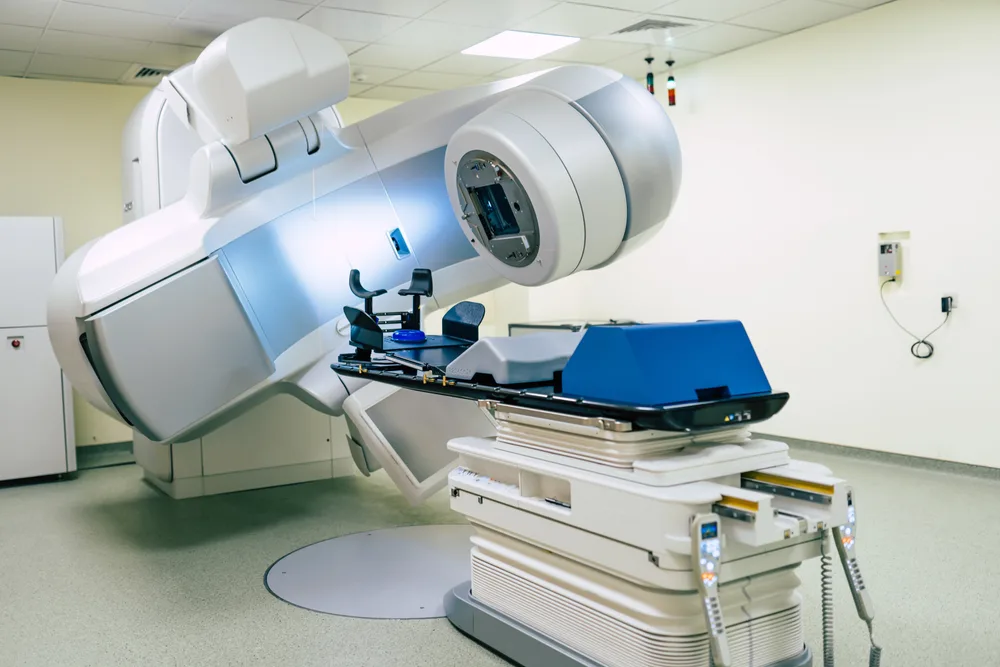
Radiation can be the main treatment for some early cancers, or used after surgery to lower the risk of the cancer returning.
Chemotherapy and other medicines
Chemotherapy is often combined with radiation for more advanced cancers. Targeted therapy and immunotherapy are used in specific situations.
Organ preservation
Wherever clinically appropriate, treatment is planned to preserve the voice box and the ability to speak and swallow. The right balance between cancer control and function is different for every person, and is decided together with a multidisciplinary team.
Why Early Diagnosis Matters
The clearest way to improve the chance of successful treatment is to find throat cancer early. Hoarseness, a sore throat, swallowing difficulty, one-sided ear pain or a neck lump lasting more than three weeks should be examined by a specialist. You can read more about the warning signs in our article on throat cancer symptoms in women, which apply equally to men.
Questions to Ask Your Doctor
- Exactly where is the cancer, and what stage is it?
- Is the aim of treatment to cure the cancer or to control it?
- What are my treatment options, and why is this one recommended for me?
- How will treatment affect my speech, swallowing and appearance?
- Is robotic or organ-preserving surgery suitable in my case?
- What will follow-up look like after treatment?
If you are unsure about the plan you have been given, it is entirely reasonable to ask for a second opinion before cancer surgery.
Frequently Asked Questions
Is early-stage throat cancer curable?
Many early-stage throat cancers can be treated with the aim of a cure, using surgery or radiation. The outlook for any individual depends on the exact location, type and their overall health, so it should be discussed with your treating specialist.
Can throat cancer come back after treatment?
Yes, it can. That is why regular follow-up visits and scans are part of treatment, and why stopping tobacco and alcohol is strongly advised.
Will I lose my voice after throat cancer treatment?
Not necessarily. Many treatments are planned to preserve the voice box. When removal of the voice box is needed, voice rehabilitation options are available.
Does HPV-related throat cancer have a better outlook?
In general, HPV-related cancers of the tonsil and base of the tongue respond better to treatment than HPV-negative cancers, but each case still needs individual assessment.
Speak to a Throat Cancer Specialist in Pune
Dr. Vidita Powle Danait is a surgical oncologist in Pune with 19+ years of experience in head and neck cancer surgery, including robotic and organ-preserving procedures. If you have been diagnosed with throat cancer or have symptoms that need checking, you can book a consultation at CanSurvive Cancer Clinic, Prabhat Road, or call +91 96199 91039. Learn more about throat cancer treatment in Pune.
This article is for general information only and is not a substitute for medical advice. Please consult a qualified doctor about your own diagnosis and treatment.